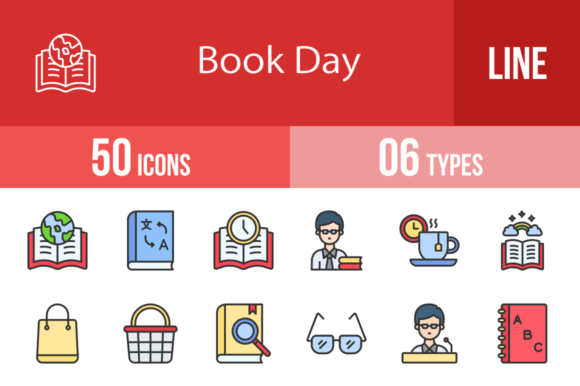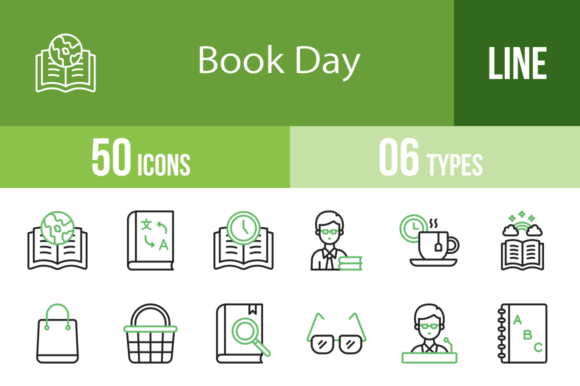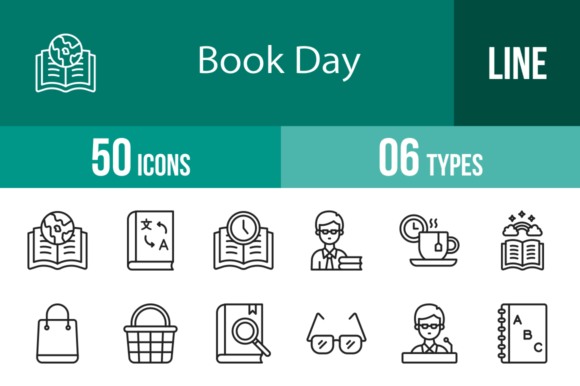
50 Book Day Line Icons: A Practical Design Resource for Digital and Print Projects
Visual communication has become the backbone of modern digital interaction, especially when it comes to educational content, literary promotions, and e-commerce platforms. The 50 Book Day Line Icons collection offers a streamlined solution for designers, developers, and content creators who need high-quality, scalable graphics without the overhead of custom illustration. This set is not merely a bundle of generic images; it is a curated toolkit designed to enhance user experience across mobile apps, websites, print materials, and presentations.
Understanding the utility of these icons requires looking beyond their aesthetic appeal. Each icon in this collection, from the classic Open Book to the more specific Audio Book and Cloud Library symbols, serves a functional purpose. They help users navigate interfaces faster, understand complex concepts at a glance, and engage with content on a deeper emotional level. Whether you are building an online learning platform or designing a promotional flyer for World Book Day, having access to ready-to-use, vector-based assets can significantly reduce production time while maintaining professional standards.
Enhancing Educational Platforms and E-Learning Interfaces
The education sector has undergone a massive digital transformation, and visual clarity is paramount for student engagement. For developers and instructional designers working on online courses, the 50 Book Day Line Icons provide immediate context. Consider the difference between a text-only menu listing "Physics," "Biology," and "Maths" versus one that uses distinct, clean line icons for each subject. The latter reduces cognitive load, allowing students to find resources quickly.
Icons such as the Professor, Degree, and Online Course symbols are particularly useful for dashboard interfaces. They help distinguish between different types of content—lectures, certifications, and reading materials. Furthermore, the inclusion of specific subject icons like Physics Book and Biology Book allows for granular categorization within large digital libraries. This level of detail ensures that users do not feel overwhelmed by vast amounts of data, making the learning journey more intuitive and less frustrating.
Boosting Conversion in Book Retail and E-Commerce
For online bookstores and literary marketplaces, the shopping experience must be seamless and visually appealing. The 50 Book Day Line Icons include essential e-commerce elements such as Shopping Basket, Shopping Bag, and Book Discount. These icons are not just decorative; they are critical calls to action. A well-designed discount badge can draw attention to special offers, while a clear shopping bag icon reassures users about the checkout process.
Moreover, the Best Seller and Book Award icons serve as social proof indicators. When placed next to specific titles, they subtly influence purchasing decisions by highlighting popularity and quality. The Gift Book icon is another powerful tool during holiday seasons, guiding users who are looking for presents rather than personal reads. By integrating these visual cues into product pages and category listings, retailers can create a more engaging and persuasive shopping environment that encourages exploration and purchase.
Supporting Content Creators and Social Media Marketing
Content creators, bloggers, and social media managers often struggle to find consistent, high-quality visuals that align with their brand identity. The 50 Book Day Line Icons offer a versatile solution for creating eye-catching graphics for Instagram posts, Pinterest pins, and blog headers. Icons like Reading Glasses, Tea Break, and Story Book evoke a cozy, relatable atmosphere that resonates with book lovers and lifestyle audiences.
The Content Creator and Book Idea icons are particularly relevant for writers and influencers sharing behind-the-scenes looks at their creative processes. These symbols can be used to break up long blocks of text in newsletters or to highlight key points in video thumbnails. Because the icons are available in multiple formats, including PNG and JPG, they can be easily dragged and dropped into social media templates without requiring advanced design skills. This accessibility empowers non-designers to maintain a professional and cohesive visual presence across all their channels.
Technical Flexibility and Cross-Platform Usability
One of the strongest advantages of this icon set is its technical versatility. Designed using a unigrid system, each icon maintains consistent proportions and stroke weights, ensuring visual harmony when used together. The collection is provided in six different formats: AI, CDR, EPS, JPG, PNG, and SVG. This variety ensures compatibility with virtually any design software or development environment.
For web and mobile app developers, the SVG format is invaluable. SVGs are scalable vector graphics that remain crisp at any size, from a tiny favicon to a large hero image. They also have smaller file sizes compared to raster images, which contributes to faster loading times—a crucial factor for SEO and user retention. Meanwhile, print designers can rely on the AI, CDR, and EPS files for high-resolution outputs in brochures, posters, and merchandise. The ability to edit and scale these vectors means that colors and styles can be adjusted to match specific brand guidelines without losing quality.
Considerations for Effective Implementation
While the 50 Book Day Line Icons are designed for maximum usability, effective implementation requires thoughtful consideration. It is important to maintain consistency in icon style throughout a project. Mixing line icons with filled or 3D icons can create visual dissonance and confuse users. Therefore, if you choose to use this line-style set, ensure that all other graphical elements in your interface or design adhere to a similar aesthetic.
Another consideration is accessibility. While icons enhance visual appeal, they should not replace text labels entirely, especially for critical navigation elements. Using icons alongside descriptive text ensures that your content is accessible to users with visual impairments or those using screen readers. Additionally, when using icons like Heart or Favorite Subject, ensure that their function is clear through context or hover states in digital interfaces.
Finally, consider the cultural context of your audience. Symbols like the Open Book or Reading Glasses are universally recognized, but others may require slight adaptation depending on regional preferences. The neutral, clean design of these icons makes them highly adaptable, but always test their interpretation with your target demographic to ensure clear communication.
Expanding Creative Possibilities Beyond Traditional Uses
Beyond standard educational and retail applications, these icons can inspire creative projects in unexpected ways. For instance, the Cloud Library and Pdf icons are perfect for tech startups developing document management solutions. The Translation Book icon can be utilized by language learning apps or global communication tools. Even the Time To Study icon can be repurposed for productivity apps focused on time management and focus sessions.
The Imagination and Knowledge icons offer abstract representations that can be used in branding for think tanks, research institutions, or creative agencies. By thinking creatively about how these symbols relate to broader concepts like growth, learning, and discovery, designers can unlock new ways to communicate complex ideas simply and effectively. The 50 Book Day Line Icons are not just a resource for book-related projects; they are a flexible toolkit for anyone looking to convey information with clarity and style.
In conclusion, investing in a high-quality icon set like this saves time, ensures consistency, and enhances the overall user experience. Whether you are a seasoned designer or a beginner looking to elevate your projects, these icons provide the foundational elements needed to create compelling, professional-grade visuals across all platforms and devices.