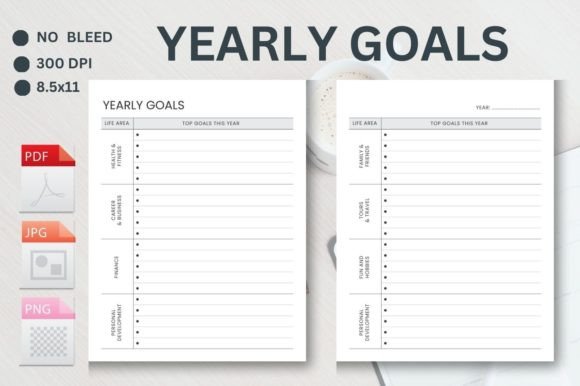
Evaluating the Yearly Goals Planner Kdp Interior for Productivity and Design Efficiency
For individuals looking to enter the self-publishing market or professionals seeking a structured framework for annual planning, the Yearly Goals Planner Kdp Interior represents a specific intersection of utility and design minimalism. This resource is not merely a collection of blank pages; it is a pre-formatted, print-ready layout designed to streamline the process of goal setting, progress tracking, and productivity management. Understanding what this interior offers requires looking beyond the surface aesthetics to evaluate its functional architecture, technical specifications, and suitability for different user needs.
Defining the Structure and Core Features
The primary value proposition of this planner lies in its comprehensive approach to organization. Spanning 120 pages, the interior is engineered to cover a full year of planning without becoming unwieldy. The structure typically integrates several critical components: goal setting frameworks, monthly overviews, weekly schedules, and daily task lists. Unlike generic notebooks, this template includes dedicated sections for habit tracking, gratitude journaling, and financial spending logs. These elements transform a simple diary into a holistic life organizer.
The design philosophy is explicitly minimalist. In a market saturated with ornate illustrations and complex graphics, this planner relies on clean lines, ample white space, and clear typography. This aesthetic choice serves a functional purpose: it reduces cognitive load, allowing users to focus on their tasks rather than navigating cluttered layouts. The inclusion of grids, checklists, and diagrammatic spaces for brainstorming ensures that the planner accommodates both linear thinkers and those who prefer visual organization.
Technical Specifications and Print Readiness
From a production standpoint, the technical details of the Yearly Goals Planner Kdp Interior are crucial for ensuring a professional final product. The files are provided in high-resolution formats, including JPG, PNG, and PDF, all at 300 DPI. This resolution is the industry standard for print quality, ensuring that text remains sharp and lines do not appear pixelated when printed on paper.
The dimensions are set at 8.5″ × 11″, a standard letter size that is familiar to most users and compatible with common binding options. Importantly, the design is configured with no bleed. This means that all critical content is kept within the safe zone, preventing text or essential graphics from being trimmed off during the cutting process. For publishers using Amazon’s Kindle Direct Publishing (KDP) platform, this "ready-to-upload" status significantly reduces the risk of rejection due to formatting errors. The fact that the interior has been tested on the KDP platform adds a layer of reliability, saving creators time on troubleshooting margin issues or file compatibility problems.
Comparative Analysis: Minimalist vs. Detailed Planners
When evaluating planning tools, it is essential to compare the minimalist approach of this interior with more detailed alternatives. On one end of the spectrum are heavily illustrated, themed planners that include motivational quotes, decorative borders, and color-coded sections. While these can be inspiring for some, they often leave less room for actual writing and can feel restrictive to users who prefer a neutral canvas.
On the other end are completely blank journals, which offer maximum freedom but lack the structural guidance necessary for effective goal progression. The Yearly Goals Planner Kdp Interior occupies a middle ground. It provides enough structure—such as designated spaces for monthly goals and weekly priorities—to guide the user’s thinking, yet remains open enough to allow for personalized note-taking and adaptation. This balance makes it suitable for a wide demographic, from students managing academic schedules to professionals organizing business projects.
Strengths and Ideal Use Cases
- Efficiency for Creators: For self-publishers, the primary benefit is time savings. Designing a 120-page planner from scratch requires significant expertise in graphic design software and an understanding of print constraints. Using a pre-tested interior allows creators to focus on cover design and marketing rather than layout mechanics.
- Versatility for Users: The inclusion of diverse sections—such as money spend trackers, wedding planning notes, and education logs—makes this planner adaptable. A user might utilize the same template for personal fitness goals, business quarterly reviews, or household organization.
- Clarity and Focus: The minimalist design supports deep work. By removing visual distractions, the planner encourages users to engage directly with their tasks and reflections, fostering a habit of consistent review and adjustment.
Limitations and Considerations
Despite its advantages, this interior may not be the perfect fit for everyone. Users who rely heavily on digital integration might find a static PDF less useful than interactive apps that offer reminders and cloud synchronization. Additionally, those who prefer highly customized layouts, such as specific hour-by-hour time blocking or intricate bullet journal setups, may find the pre-defined structures too rigid. The no-bleed format, while safe, also limits creative possibilities for edge-to-edge designs, which some artists might prefer for a more premium aesthetic.
Decision Factors for Buyers and Publishers
Choosing whether to utilize this Yearly Goals Planner Kdp Interior depends on specific goals and preferences. For publishers, the decision hinges on the target audience. If the intended market values simplicity, professionalism, and ease of use, this minimalist template is a strong candidate. It appeals to adults aged 20–50 who are likely balancing multiple responsibilities and need a tool that facilitates quick entry and review without fuss.
For end-users purchasing a finished book based on this interior, the decision should be based on their planning style. If you thrive on structure but dislike clutter, this format offers a supportive framework. However, if you prefer a completely open-ended space for free-form journaling or require specialized sections not included here (such as detailed meal planning or complex project management charts), you may need to look for a more specialized alternative or a customizable digital option.
Integrating the Planner into Daily Routine
To maximize the benefits of this tool, consistency is key. The yearly overview allows for big-picture visioning, while the monthly and weekly spreads break down these ambitions into actionable steps. Users are encouraged to start each month by reviewing their yearly goals and setting specific targets for the upcoming weeks. The daily pages then serve as a tactical space for managing immediate tasks, habits, and reflections.
The habit tracker component is particularly powerful for behavior change. By visually monitoring progress over time, users can identify patterns and stay motivated. Similarly, the gratitude section promotes mental well-being, balancing the productivity focus with positive reflection. This holistic approach ensures that the planner supports not just professional achievement, but personal growth and balance as well.
Final Thoughts on Utility and Value
The Yearly Goals Planner Kdp Interior stands out as a practical, well-engineered resource in the crowded field of productivity tools. Its strength lies in its balance of structure and simplicity, backed by technical reliability for publishers. While it may not suit those seeking high customization or digital interactivity, it offers immense value for individuals and creators who prioritize clarity, efficiency, and proven design principles. Whether used as a foundation for a new publishing venture or as a personal tool for organizing a complex year, this interior provides a solid framework for turning intentions into achieved results.