The Art of the Ordinary: How 3D Rendered Paper Clips Elevate Modern Design Projects
In the vast landscape of digital assets, it is often the smallest details that make the most significant impact. Consider the humble paper clip. For over a century, this simple loop of wire has been a staple of office life, serving as a silent guardian of paperwork and organization. However, in the realm of digital design, the paper clip has transcended its functional roots to become a powerful symbol of connection, creativity, and professional polish. Today, designers are increasingly turning to high-quality 3D rendered paper clips to add depth, realism, and tactile appeal to their visual compositions.
Whether you are working on a corporate branding package, an educational infographic, or a sleek web interface, understanding the utility and aesthetic value of these digital objects can transform your work. This article explores why 3D rendered stationery items, specifically the classic silver clip, have become essential tools for modern creatives.
Why Choose 3D Renders Over Traditional Photography?
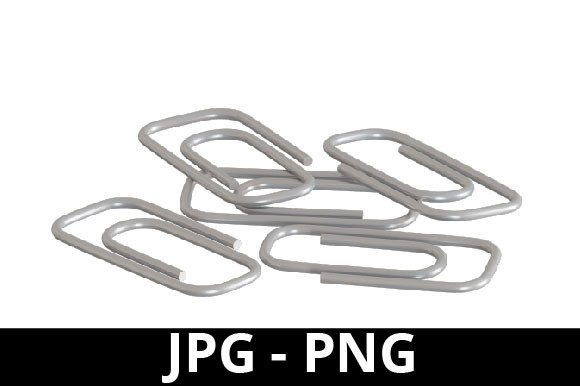
When a designer needs an image of a paper clip, the instinct might be to snap a photo with a smartphone. While authentic, photography comes with limitations: lighting inconsistencies, shadows that are difficult to remove, and the need for physical props. This is where 3D render technology shines. A 3D rendered paper clip is a computer-generated image that simulates real-world physics and light interaction with mathematical precision.
The primary advantage is control. In a 3D environment, you can dictate the exact angle of the light source, ensuring the shiny, metallic surface reflects highlights perfectly. You can choose a close-up view that reveals the subtle texture of the steel wire or pull back to show the clip holding a stack of notepaper. Furthermore, these assets are typically delivered in versatile formats like JPG and PNG, often within a convenient ZIP folder. The PNG format, with its transparent background, allows for seamless integration into any design project without the hassle of manual cutouts.
The Aesthetic Appeal of Realism
Modern audiences are visually sophisticated. They can instantly distinguish between a flat, cartoonish icon and a realistic object that appears to have weight and substance. A well-rendered paper clip features accurate curves, proper folding geometry, and the characteristic gray or silver hue of metal. This realism triggers a psychological response known as "tactile visuality," where the viewer feels they could reach out and touch the object. This sensory engagement makes marketing materials more memorable and user interfaces more intuitive.
Versatility Across Industries
The application of 3D rendered paper clips extends far beyond simple decoration. Their symbolic nature—holding things together—makes them relevant across various sectors.
- Business and Office: In corporate presentations, a paper clip icon can represent attachment, organization, or administrative efficiency. It serves as a visual metaphor for keeping projects on track.
- Education: For school materials or e-learning modules, these graphics can illustrate lessons on office supplies, history, or even physics concepts related to tension and material strength.
- Creative Agencies: Designers use these elements in mood boards and mockups to present logo designs or business card layouts in a realistic context, making the pitch more compelling to clients.
By using a holder or binder motif, you can subtly communicate themes of security and reliability. Whether it is a memo pinned to a virtual board or a sheet of paper neatly clipped, the message is one of order amidst chaos.
Technical Considerations for Designers
To get the most out of your 3D assets, it is crucial to understand the technical specifications. When you download a pack of 3D rendered paper clips, you will likely encounter several file types. Understanding when to use each is key to maintaining workflow efficiency.
- PNG (Portable Network Graphics): This is the gold standard for web design and layering. Because it supports transparency, you can place the isolated paper clip directly over colored backgrounds, gradients, or complex images without any white box surrounding it.
- JPG (Joint Photographic Experts Group): Best for full-color photographs or when the background is part of the composition. If the render includes a shadow cast on a surface, a JPG might preserve those subtle gradient details better than a PNG, though at the cost of flexibility.
- Resolution and Scale: Always check the pixel dimensions. A simple shape like a paper clip can look pixelated if stretched too far. High-resolution renders ensure that even when zoomed in for a close-up, the rounded edges remain smooth and the metallic sheen remains crisp.
Common Misconceptions About Stock 3D Assets
There is a lingering belief that using stock 3D renders results in generic or "cheap" looking design. This is a misunderstanding of how modern assets are created. High-end 3D renders are crafted with attention to detail that rivals professional product photography. The wire thickness, the reflection of the environment, and the precise shape of the clip are all meticulously modeled. When used creatively—such as combining multiple clips to form a pattern or using them as anchors for text—they become unique design elements rather than generic fillers.
Integrating Paper Clips into Your Creative Workflow
So, how do you actually use these assets? Here are a few practical ideas to spark your creativity:
1. The "Attachment" Icon: Replace standard email attachment icons with a stylish, 3D rendered paper clip. It adds a touch of personality to user interfaces and makes digital interactions feel more human.
2. Educational Infographics: Use paper clips to "pin" important facts or statistics to a background. This creates a scrapbook aesthetic that is both trendy and easy to read. It works particularly well for topics related to stationery, education, or organizational tips.
3. Brand Storytelling: If your brand values simplicity and efficiency, feature a single, perfectly rendered silver paper clip in your hero image. The minimalism speaks volumes about your commitment to clutter-free solutions.
The Future of Digital Stationery
As technology advances, the line between physical and digital continues to blur. We are seeing a rise in "neumorphism" and "skeuomorphism" in UI design, where digital elements mimic real-world textures. In this context, the demand for hyper-realistic 3D rendered objects like paper clips is growing. They provide a bridge between the tangible world we inhabit and the digital spaces we navigate daily.
Moreover, these assets are not static. With the advent of real-time rendering engines, designers can now create interactive experiences where users can manipulate these objects. Imagine a website where clicking a paper clip animates it opening to reveal content. The potential for engagement is limitless.
Conclusion
The 3d rendered paper clip is more than just a digital replica of an office supply; it is a versatile design tool that offers realism, flexibility, and symbolic power. By incorporating these high-quality assets into your work, you can enhance the visual appeal of your projects, whether they are intended for business, education, or personal creativity. From the shiny reflections on the steel surface to the perfect curve of the wire, every detail contributes to a polished professional look.
Next time you are searching for the perfect graphic to tie your design together, consider the humble paper clip. Download a high-quality ZIP folder of renders, experiment with different angles and lighting, and discover how this small object can make a big difference in your visual storytelling. Embrace the blend of tradition and technology, and let your designs hold the attention of your audience just as securely as a clip holds a stack of papers.