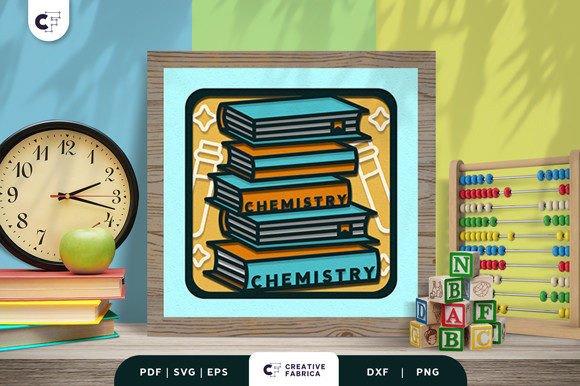
Chemistry Book Stack 3D Shadow Box: A Guide to Precision and Presentation
There is a distinct satisfaction in transforming flat sheets of cardstock into a tangible, multi-dimensional scene. The Chemistry Book Stack 3D Shadow Box captures this essence perfectly, merging the academic rigor of science with the delicate artistry of paper crafting. For many, chemistry represents a challenging gateway to educational success—a subject defined by thick textbooks and complex formulas. This design reframes that narrative, turning the symbol of study into a piece of celebratory decor. Whether you are an educator looking to brighten a classroom, a student marking a milestone, or a hobbyist seeking a meaningful DIY project, understanding the nuances of this layered paper cut is essential for achieving a professional result.
Understanding the Design Complexity
At first glance, a seven-layer paper cut might seem straightforward. However, the Chemistry Book Stack 3D Shadow Box relies on precise depth perception and structural integrity. The stack of books is the star of this composition, designed to mimic the weight and texture of real laboratory manuals. When you receive the files—available in SVG, PDF, EPS, PNG, and DXF formats—you are getting more than just images; you are receiving a blueprint for spatial arrangement. Each layer contributes to the illusion of depth, creating shadows that give the artwork its three-dimensional character. Ignoring the specific role of each layer is the first mistake many creators make, leading to a flat, unimpressive final product.
Common Pitfalls in Material Selection
One of the most frequent errors enthusiasts encounter is underestimating the importance of paper weight. The design specifies the use of Encore Cardstock 80 lb cover (216 gsm). This is not an arbitrary suggestion. Lighter paper tends to warp when glued, losing the crisp edges necessary for a clean shadow box effect. Conversely, paper that is too thick may not fit comfortably within standard frame depths or may tear during the intricate weeding process.
Using substandard materials can drastically affect the usability and longevity of your decor. Thin cardstock may buckle under the weight of the upper layers, causing the "books" to sag rather than stand proud. To avoid this, always check the GSM rating before purchasing supplies. If you cannot source the exact brand recommended, ensure your alternative matches the 216 gsm specification closely. This attention to detail ensures that your living room home decor or bedroom accent maintains its structural beauty over time.
Misunderstanding Layer Assembly and Spacing
Another critical area where beginners stumble is the assembly process itself. The seven layers of the Chemistry Book Stack require careful spacing to create the desired 3D effect. A common misconception is that gluing layers directly on top of one another will yield the best result. In reality, this eliminates the shadow play that defines the genre. Without adequate spacing, the design loses its dimensionality, appearing as a single, cluttered sheet rather than a curated scene.
To achieve the intended visual impact, use foam tape or precision-cut spacers between layers. This technique lifts each element, allowing light to cast subtle shadows that enhance the realism of the book spines and titles. Take your time during this phase. Rushing the alignment can lead to skewed layers, which are difficult to correct once the adhesive sets. Treat the assembly as a meditative practice rather than a race to completion. The result is a piece that feels substantial and professionally crafted, suitable for gifting to anyone who loves science.
Color Choices and Lighting Considerations
The preview images provided with digital downloads are often stylized for marketing purposes. It is vital to remember that the final product color may vary slightly due to lighting sources and the paper color you choose. Many creators assume that sticking to traditional black or white cardstock is the safest bet. While monochrome designs are elegant, they can sometimes lack the vibrancy needed to highlight the chemical symbols and book details embedded in the design.
Consider experimenting with muted tones that reflect a laboratory aesthetic—slate greys, deep blues, or even aged parchment colors for the book pages. These choices can add warmth and character to your classroom decor or DIY projects. Additionally, consider where the shadow box will be displayed. Natural light from a window will interact differently with the layers than artificial overhead lighting. Test your color combinations under the intended lighting conditions before committing to the final assembly. This proactive approach prevents disappointment and ensures the piece complements its environment effectively.
Digital File Preparation and Cutting Accuracy
Before you even touch the cardstock, the quality of your digital preparation determines the ease of cutting. The Chemistry Book Stack 3D Shadow Box comes in multiple formats to accommodate various cutting machines. However, simply uploading an SVG file without checking the scale can lead to significant issues. The design is sized at 20.32×20.32 cm. If your software defaults to inches or millimeters without conversion, your layers will not align, rendering the project unusable.
Always verify the dimensions in your cutting software before sending the job to your machine. Furthermore, ensure that your blade is sharp and calibrated for 80 lb cardstock. Dull blades cause fraying edges, which detract from the clean lines required for a polished look. A small test cut on scrap paper can save you from ruining expensive materials. This step is particularly important for entrepreneurs or small business owners who may be producing these items for sale, where consistency and quality control are paramount.
Maximizing the Value of Your Project
Beyond the technical aspects, consider the purpose of your creation. Is this a birthday present for a chemistry major? A decorative piece for a science teacher’s office? Or a personal reward for finishing a challenging semester? Tailoring the presentation to the recipient enhances the emotional value of the gift. For educators, this item serves as an inspiring classroom decor piece that normalizes the struggle and triumph of learning complex subjects. For homeowners, it adds a unique, intellectual flair to living spaces.
If you are new to layered paper crafts, start by organizing your workspace. Keep your layers numbered and separated to avoid confusion. The process of assembling the Chemistry Book Stack is not just about following instructions; it is about engaging with the material. Enjoy the tactile experience of handling the cardstock and watching the image come to life. This mindfulness transforms a simple craft into a rewarding creative outlet.
Final Checks Before Completion
Before sealing your shadow box, perform a final inspection. Check for any stray glue residues, misaligned edges, or dust particles trapped between layers. These small imperfections can be distracting once the glass is placed over the artwork. Use a soft brush or compressed air to clean the layers gently. Ensure that the frame you select is deep enough to accommodate the seven layers plus any spacers used. A shallow frame will compress the design, negating the 3D effect you worked hard to create.
By avoiding these common mistakes and focusing on quality materials and precise assembly, you elevate the Chemistry Book Stack 3D Shadow Box from a simple craft kit to a sophisticated piece of art. Whether you are buying the digital files for personal use or exploring them as part of a broader creative portfolio, the key lies in patience and attention to detail. Embrace the challenge, respect the medium, and enjoy the process of bringing this scientific tribute to life.
For those ready to begin, ensure you have the right supplies on hand. High-quality materials make a significant difference in the final outcome. You can find suitable heavy-weight papers at specialized retailers. Click here to visit 12×12 Cardstock Shop to explore options that meet the 216 gsm requirement. This is a paid link at no extra cost to you, supporting the creation of more helpful guides like this one.